

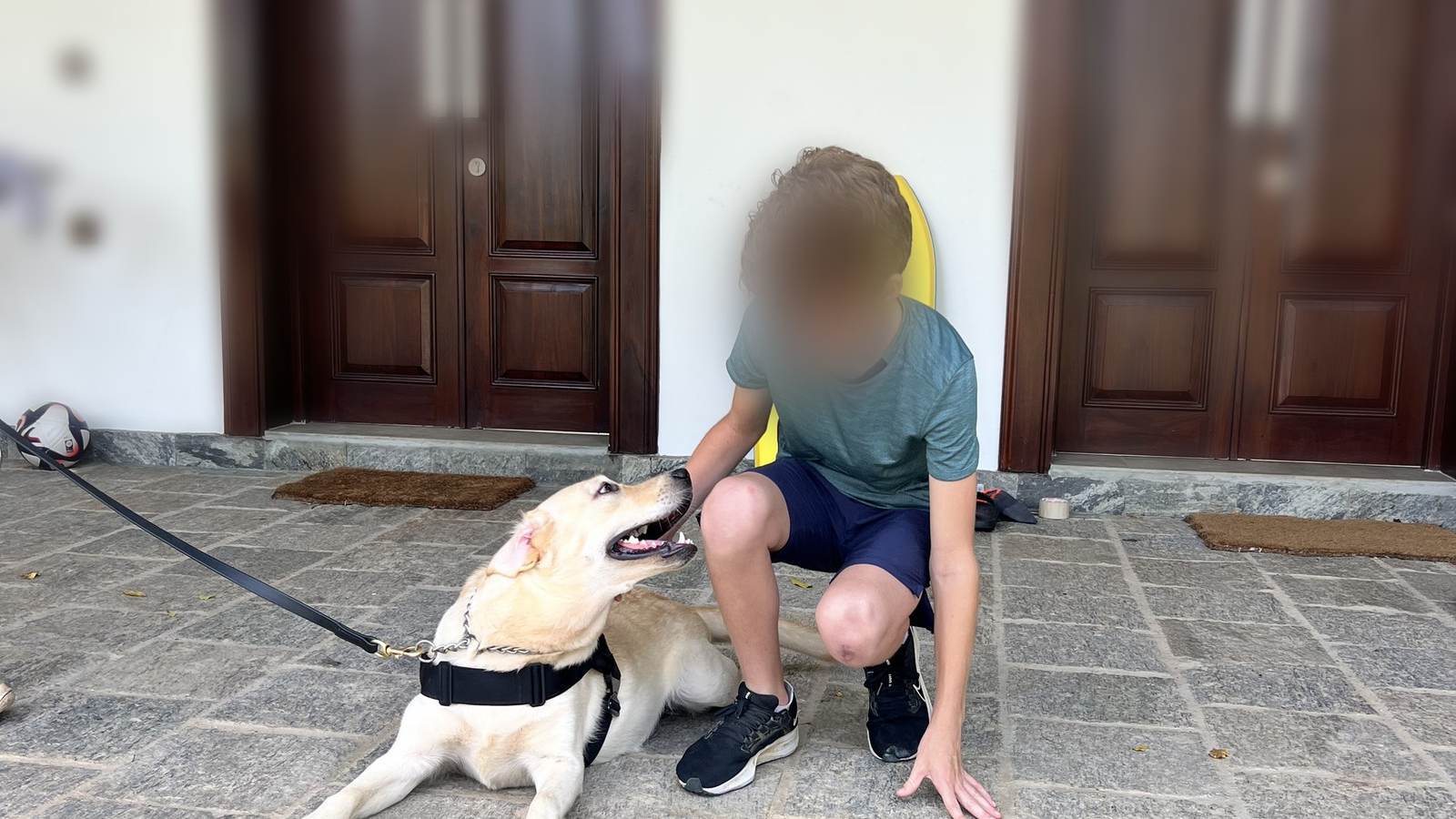
Every household has routines. A diplomatic household also has rotation: people, staff, security arrangements, visitors, travel, and eventually the posting itself. The dog lives inside those changes even when nobody has explained them.
VONFIDEL K9’s work has included diplomatic and expatriate households in Sri Lanka. The canine problems in these homes are usually familiar: pulling, guarding, separation distress, unreliable recall, conflict around visitors, or confusion about who handles the dog. The setting makes them harder because the human system is unusually mobile.
Arrival is the first test. A dog may have crossed time zones, changed climate, lost familiar smells, and entered a house full of new people. Training on the first day should not be driven by the household’s wish to restore normality as quickly as possible. The useful priorities are quieter: health, sleep, a secure place to rest, predictable feeding and walking, and a small number of clear rules delivered consistently.
The household then needs a shared handling plan. Diplomatic residences often include domestic staff, drivers, gardeners, and security personnel. Some will interact with the dog every day. If each person uses a different cue or allows a different threshold rule, the dog receives a rotating set of instructions.
Not everybody needs to become a trainer. They do need to know the rules relevant to their role: who opens the gate, where the dog stays when visitors arrive, how feeding is managed, what to do if the dog refuses a cue, and which situations require the primary handler. A short written protocol can be more reliable than verbal instructions passed from one staff member to another.
Official functions deserve rehearsal before the first crowded event. The dog’s safe place, movement route, handler, toilet break, and visitor boundary should already be familiar. Some dogs can remain calmly integrated with part of the household. Others are better managed away from the event. That choice should be based on the dog’s behaviour and welfare, not on appearance.
Departure creates a different set of pressures. Crates appear, possessions move, staff become unsettled, and the family’s routine changes. The dog often notices well before travel day. Preparation should cover confinement, vehicle movement, handling by unfamiliar people, veterinary and airline requirements, and the routine expected at the next home. These matters need to be planned with the relevant veterinarian, carrier, and destination authorities; rules vary by country and route.
The most durable training in this context is portable. It does not depend on one gate, one garden, or one employee. The dog understands a small set of clear cues, can settle in an assigned place, accepts necessary handling, and can take guidance from the people who genuinely manage its life.
Confidentiality is part of professional conduct. A diplomatic client should not have to trade privacy for evidence that work occurred. Public claims therefore remain general. The assessment, household plan, and training record belong to the client.
The aim is continuity through change. A location will not hold forever. A clear relationship between dog and handler can travel.
VONFIDEL K9’s work has included diplomatic and expatriate households in Sri Lanka. The canine problems in these homes are usually familiar: pulling, guarding, separation distress, unreliable recall, conflict around visitors, or confusion about who handles the dog. The setting makes them harder because the human system is unusually mobile.
Arrival is the first test. A dog may have crossed time zones, changed climate, lost familiar smells, and entered a house full of new people. Training on the first day should not be driven by the household’s wish to restore normality as quickly as possible. The useful priorities are quieter: health, sleep, a secure place to rest, predictable feeding and walking, and a small number of clear rules delivered consistently.
The household then needs a shared handling plan. Diplomatic residences often include domestic staff, drivers, gardeners, and security personnel. Some will interact with the dog every day. If each person uses a different cue or allows a different threshold rule, the dog receives a rotating set of instructions.
Not everybody needs to become a trainer. They do need to know the rules relevant to their role: who opens the gate, where the dog stays when visitors arrive, how feeding is managed, what to do if the dog refuses a cue, and which situations require the primary handler. A short written protocol can be more reliable than verbal instructions passed from one staff member to another.
Official functions deserve rehearsal before the first crowded event. The dog’s safe place, movement route, handler, toilet break, and visitor boundary should already be familiar. Some dogs can remain calmly integrated with part of the household. Others are better managed away from the event. That choice should be based on the dog’s behaviour and welfare, not on appearance.
Departure creates a different set of pressures. Crates appear, possessions move, staff become unsettled, and the family’s routine changes. The dog often notices well before travel day. Preparation should cover confinement, vehicle movement, handling by unfamiliar people, veterinary and airline requirements, and the routine expected at the next home. These matters need to be planned with the relevant veterinarian, carrier, and destination authorities; rules vary by country and route.
The most durable training in this context is portable. It does not depend on one gate, one garden, or one employee. The dog understands a small set of clear cues, can settle in an assigned place, accepts necessary handling, and can take guidance from the people who genuinely manage its life.
Confidentiality is part of professional conduct. A diplomatic client should not have to trade privacy for evidence that work occurred. Public claims therefore remain general. The assessment, household plan, and training record belong to the client.
The aim is continuity through change. A location will not hold forever. A clear relationship between dog and handler can travel.